Real Face Shape Detector

Women's guide

Seven readings, shown through presentation.

The measurements stay the same; the styling context changes. Compare hair, fringe, frame, and neckline directions across all seven readings, with reference portraits and the geometry behind them.

Reference portraits are AI-generated locally. They are examples, not client photos, and they are never used to analyse your image.

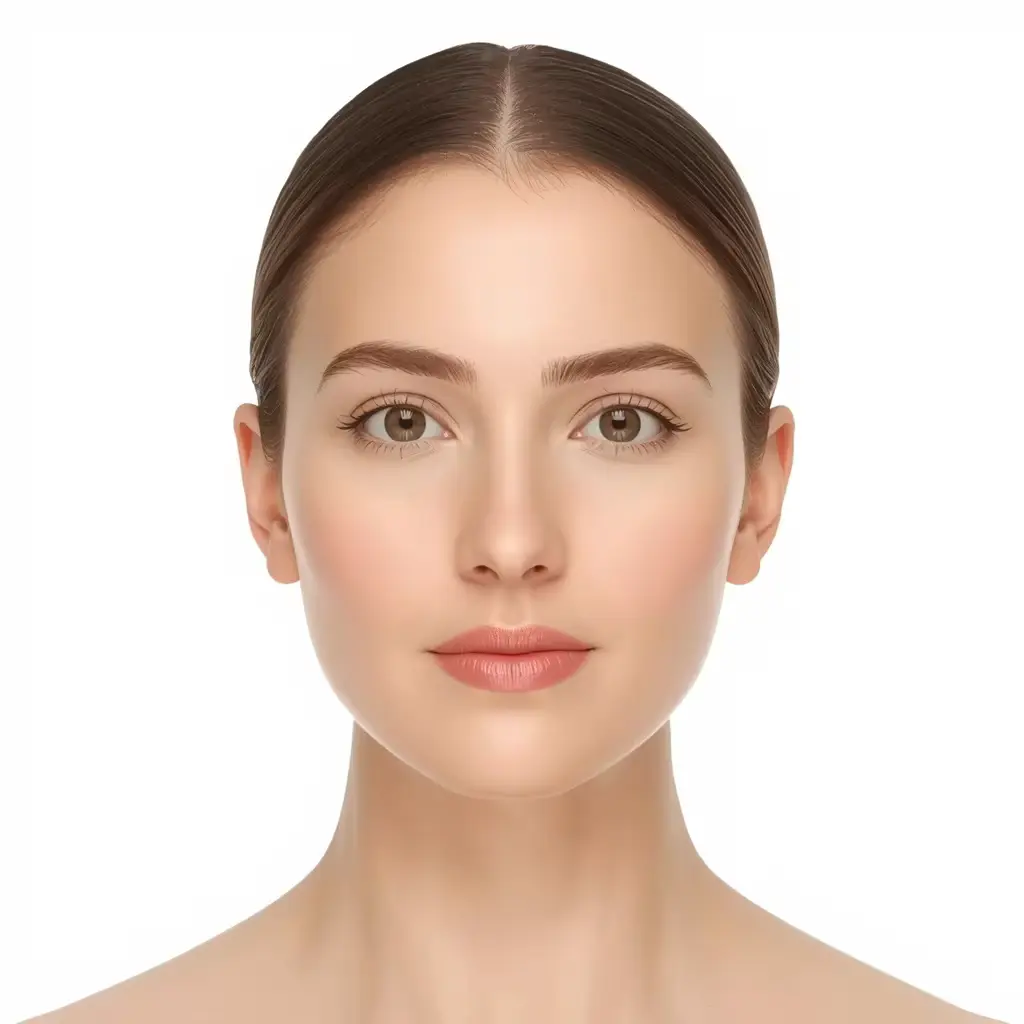
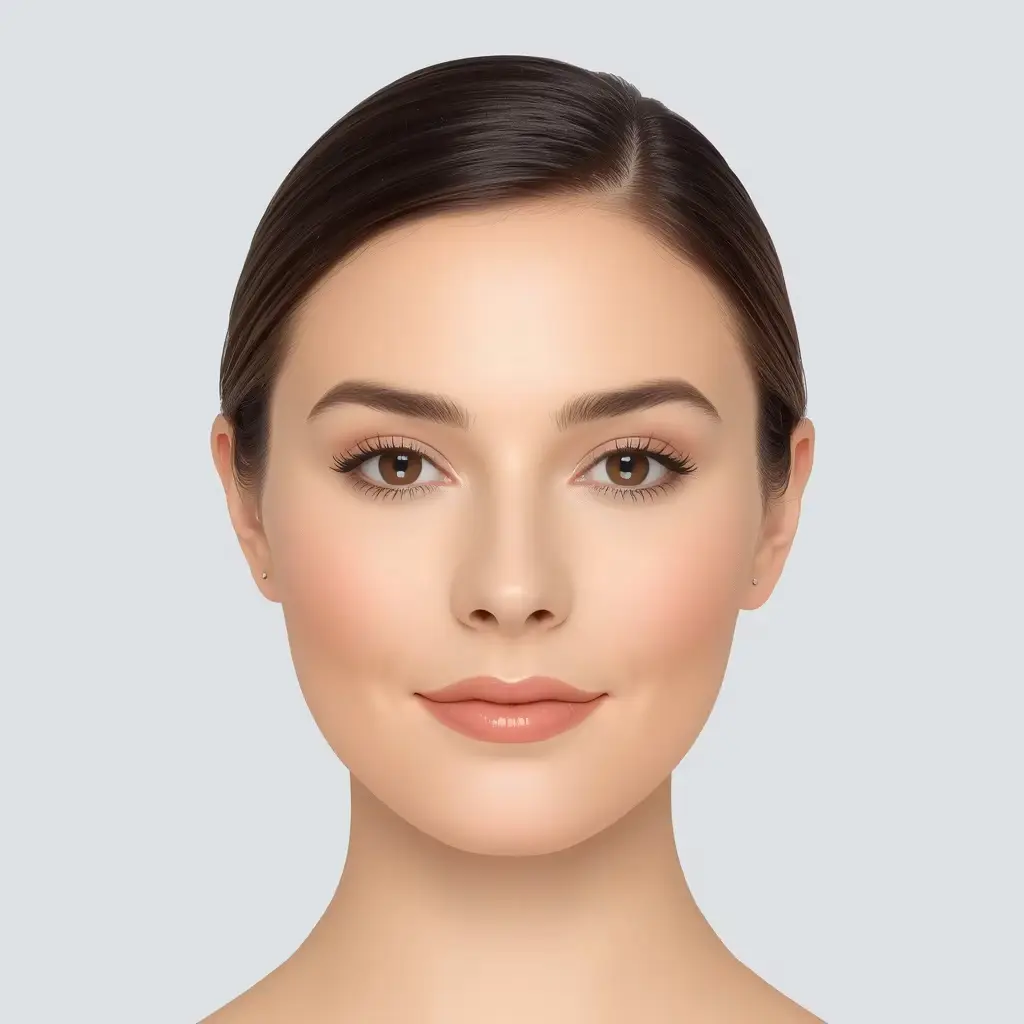
Reference portrait of a woman with oval face proportions, shown in the women's guide.Oval
Small reference portrait of a woman with heart face proportions in the women's guide.

Geometry first, presentation second.

A face-shape label is a shortcut for a set of proportions. It is not a beauty category, a personality type, or a rule about how you should look. The detector measures visible width, length, and taper from a 2D photo, then shows the closest reading and the nearest alternatives.

This guide translates those readings into presentation choices: where volume sits, how a fringe breaks the forehead, how a frame interacts with the cheek line, and how a neckline changes the visual weight below the face. The directions are deliberately concrete so you can compare them, not so you can follow them blindly.

The portraits are AI-generated references made for this site. They show the same geometry with different hair and styling, but they are not real clients and they are not overlays from your photo.

Portrait reference of a woman with an oval face, balanced cheekbones, and a gently rounded forehead.Oval
OvalBalanced widths with a soft cheek and jaw curve.

Reading 01

Oval

Full oval guide →

Oval readings tend to show balanced width across the forehead and cheekbones, a gently narrowing jaw, and moderate length. The outline is smooth rather than sharp.

Geometry behind the reading

The length-to-width ratio usually sits in the middle of the range. Upper and lower widths stay close without a hard jaw corner, which is why oval is often described as a balanced reading.

Presentation cues

Hair

Most lengths and partings work. Keep volume balanced around the head rather than concentrating it at the crown, and use the natural texture instead of forcing a shape.

Fringe

A curtain fringe, side sweep, or soft blunt fringe can all work. Choose based on forehead height and hair density rather than the label alone.

Frames

Rectangular, oval, and browline frames are all viable. Check the fit at the temples and the bridge before committing to the shape.

Neckline

Crew, V, scoop, and collared shirts all sit comfortably with this outline. Use necklines to change the visual length rather than to correct a problem.

What usually overcorrects

The balanced reading is easy to overcorrect. Very heavy layers around the jaw, an oversized frame, or a neckline that adds width in exactly the same place can make the outline look busier than it is.
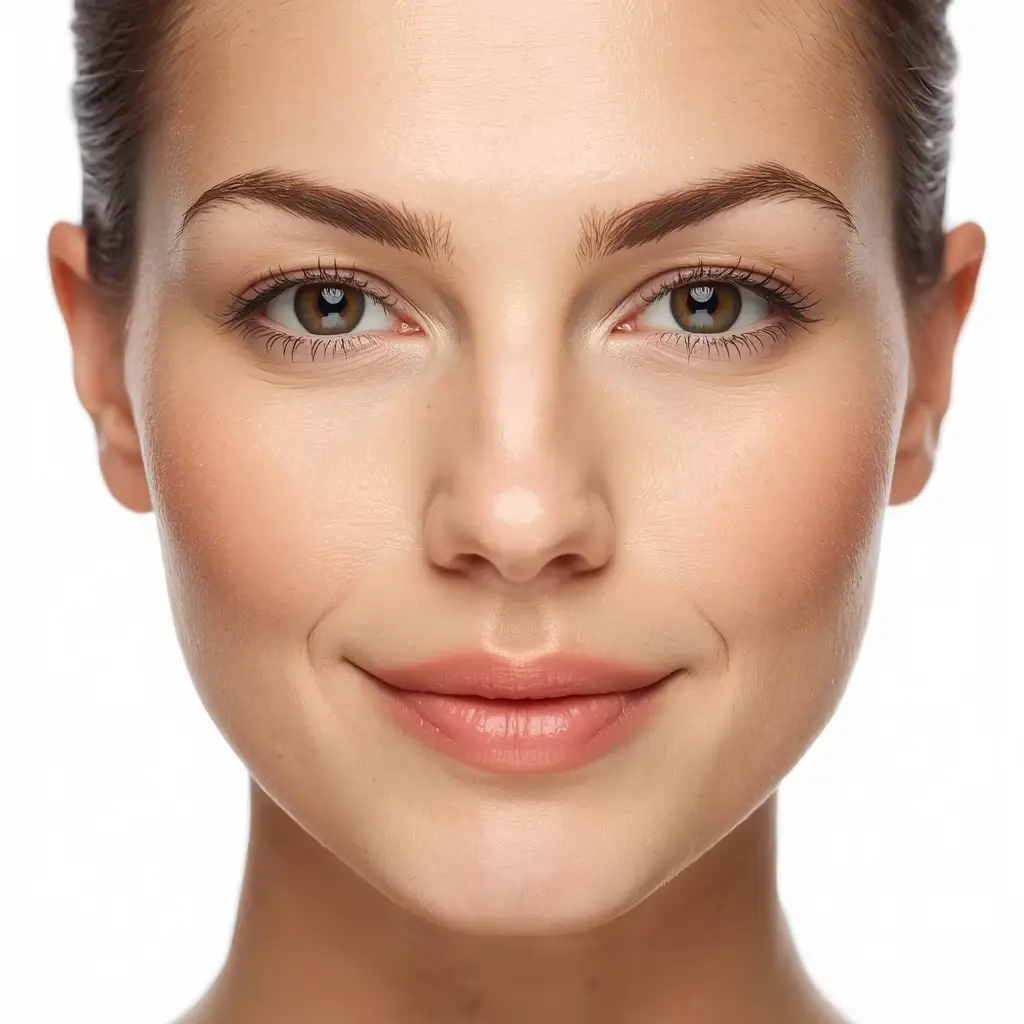
Close-up portrait reference of a woman with a round face, full cheeks, and a soft jawline.Round
RoundFull cheeks with a gentle, curved jawline.

Reading 02

Round

Full round guide →

Round readings show a shorter apparent length, full cheeks, and a softly curved jaw. The outline is compact and circular rather than elongated.

Geometry behind the reading

The face reads close to square in proportion, with width carried through the cheeks and little taper at the chin. The jaw turns gradually instead of forming a sharp corner.

Presentation cues

Hair

Height at the crown and a little length below the jaw add vertical direction. A long bob or a layered cut that falls past the cheek can create a longer line.

Fringe

A side-swept fringe or curtain bangs break up the roundness. A heavy, straight fringe can make the face look shorter if it covers too much forehead.

Frames

Angular or rectangular frames add contrast. A frame that is slightly wider than the cheeks can help the face read less circular.

Neckline

V-necks, deep scoops, and open collars create a vertical line below the face. A high, wide crew neck can make the outline read rounder.

What usually overcorrects

Round fringes, round frames, and a chin-length rounded bob repeat the same curve. The aim is contrast and a little vertical direction, not hiding the face.

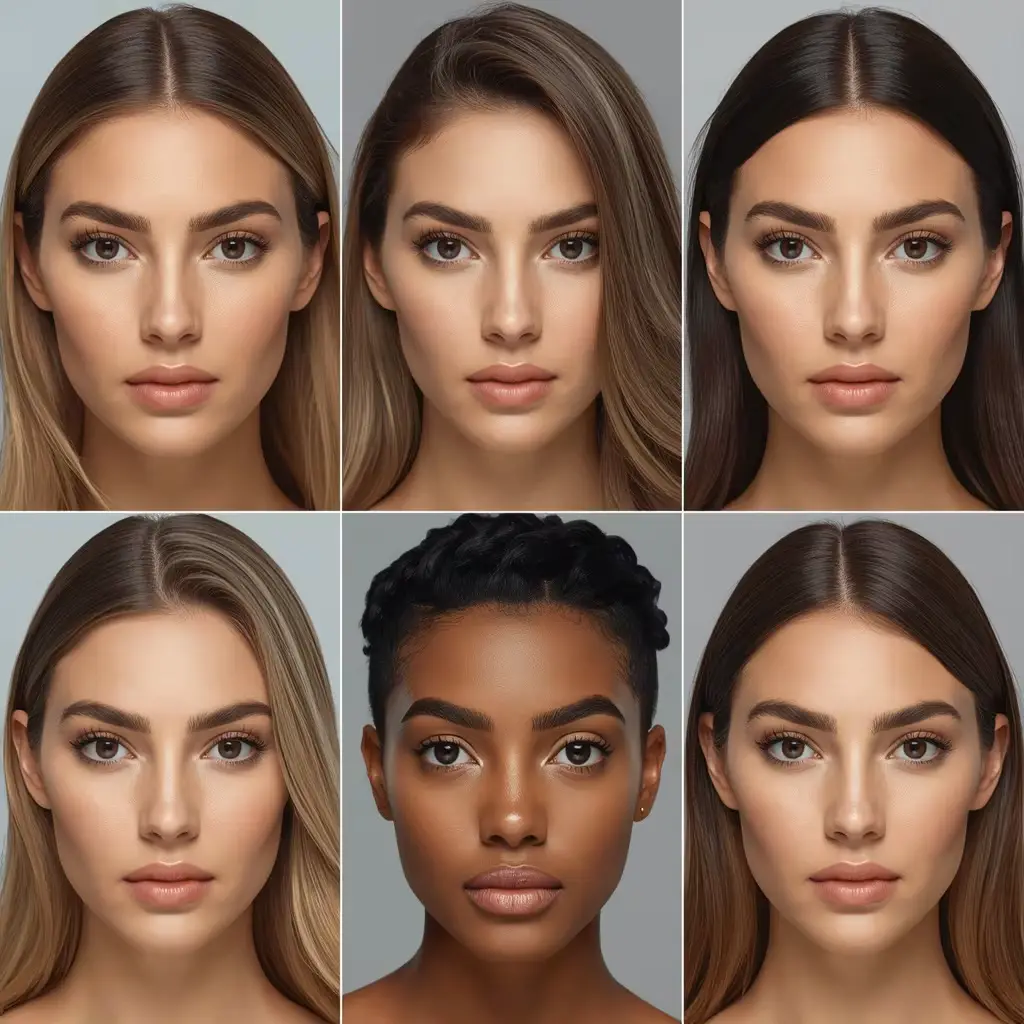
Grid of six portrait studies of women with square faces, broad foreheads, and defined jawlines.Portrait studySquare
SquareA six-portrait study of balanced widths and defined jawlines.

Reading 03

Square

Full square guide →

Square readings show broad forehead and jaw widths, strong corners, and a relatively short-to-moderate length. The jawline is one of the defining cues.

Geometry behind the reading

Forehead, cheekbones, and jaw sit close in width, while the jawline turns more sharply than in oval or round readings. The lower face carries visible structure.

Presentation cues

Hair

Soft layers, a side part, or a textured bob soften the corners. A blunt cut exactly at the jaw can emphasize the strongest angle.

Fringe

Curtain bangs or a soft side fringe break up the forehead width. A heavy, straight fringe can make the upper face look more rectangular.

Frames

Round or oval frames counteract strong angles. A thinner rim keeps the frame from competing with the jaw.

Neckline

Scoop necks, cowls, and softer collars add a curve below the face. Sharp, wide square necklines repeat the jaw angle.

What usually overcorrects

A heavy, wide frame plus a blunt jaw-length cut can make the lower face read wider. If the goal is softness, reduce one source of visual weight rather than adding more.

Portrait reference of a woman with a heart-shaped face, a wide forehead, and a tapered chin.Heart
HeartA wider upper face with a softly tapered chin.

Reading 04

Heart

Full heart guide →

Heart readings show a wider forehead or cheekbone line, then a narrower jaw and chin. The upper face carries more relative width.

Geometry behind the reading

The upper third is often the widest part of the outline, and the lower third tapers more strongly than in oval or square readings. Length can vary from moderate to long.

Presentation cues

Hair

Avoid stacking excess volume at the crown if the forehead already reads wide. A side part or a style with width at the jaw can balance the taper.

Fringe

Curtain bangs or a side sweep break up the upper width. A heavy, straight fringe can make the forehead look wider and the chin look narrower.

Frames

Frames with a wider lower line or a rimless bottom keep attention from the upper corners. A strong brow bar can do the opposite.

Neckline

Boat necks and wide collars add width at the shoulder line, which can balance a narrower jaw. Deep V-necks can lengthen the taper.

What usually overcorrects

A very wide, angular frame can exaggerate the upper width. So can a hairstyle that is tight at the temples and voluminous on top. Balance the thirds before adding more height.

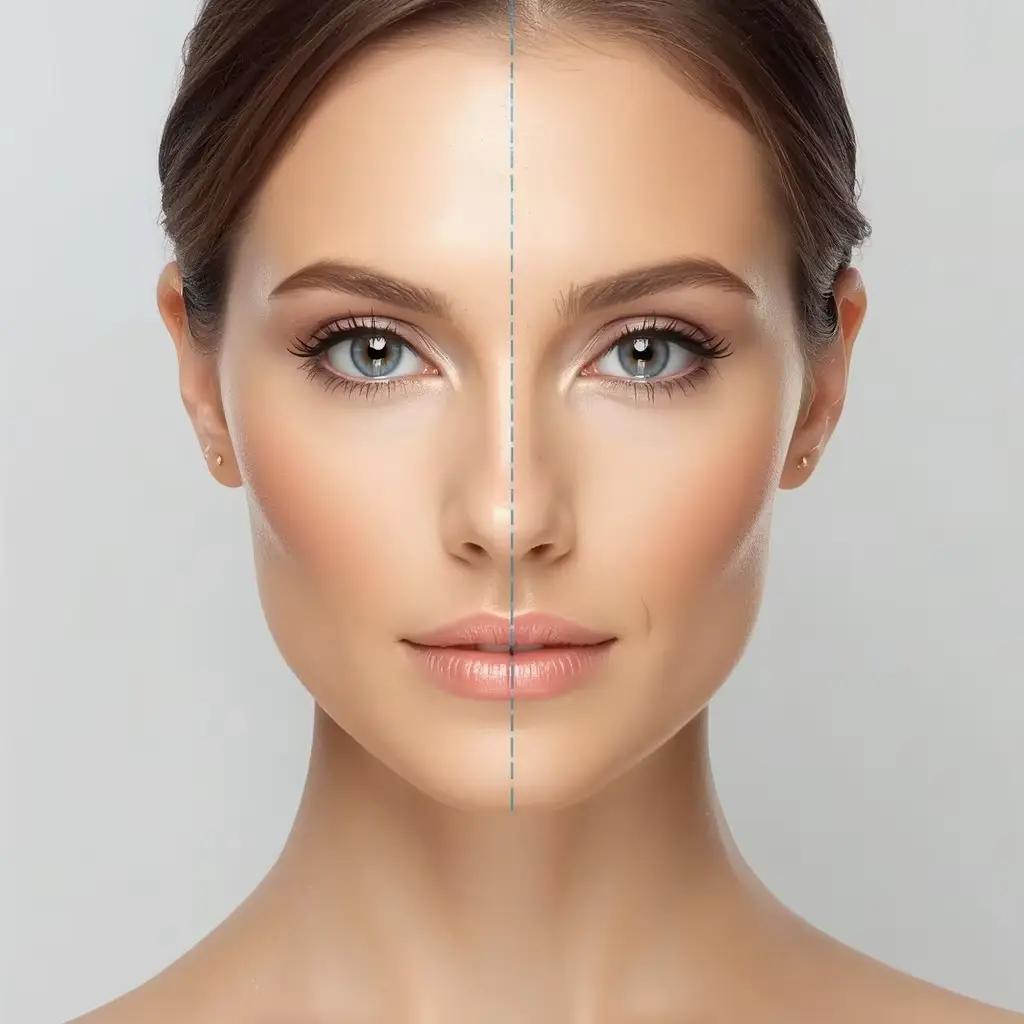
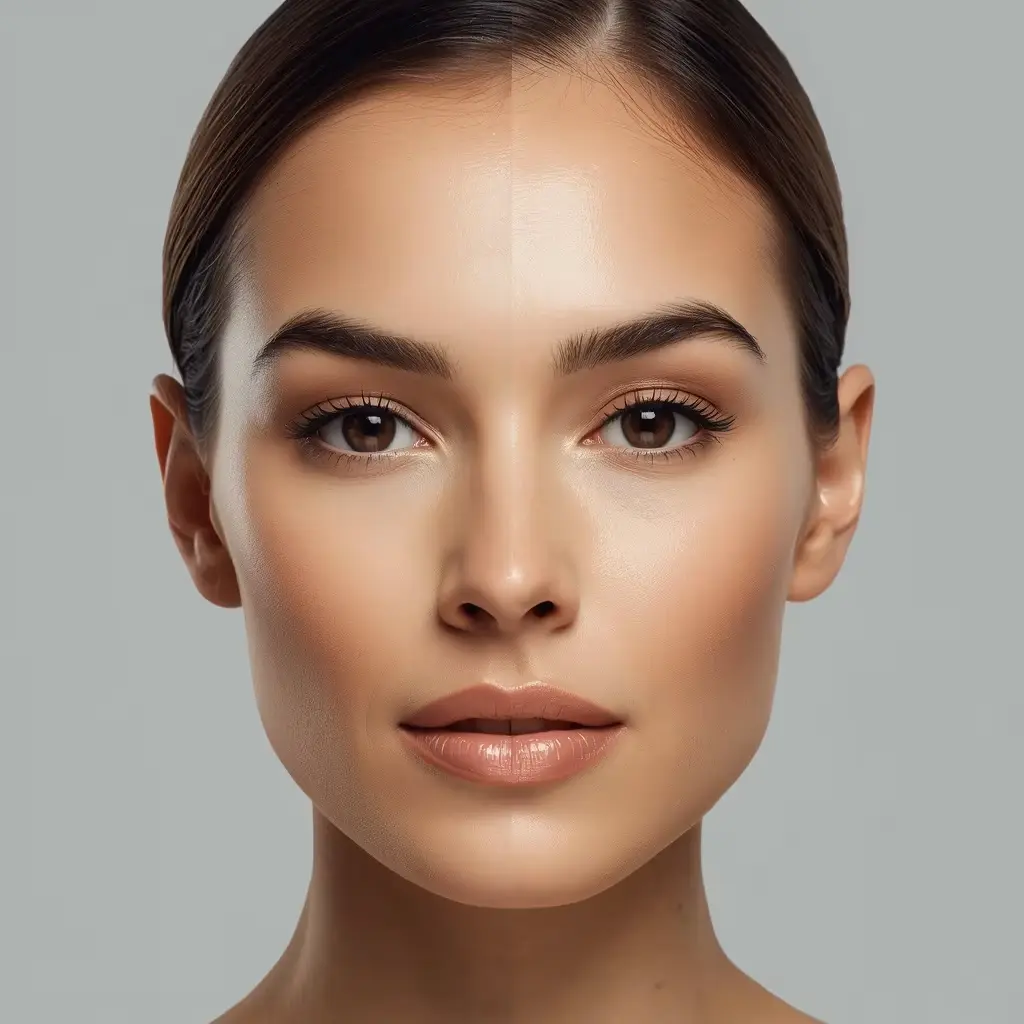
Split-face symmetry study of a woman with a diamond-shaped face, prominent cheekbones, and a narrow forehead.Symmetry studyDiamond
DiamondA split-face symmetry study of prominent cheekbones and narrow ends.

Reading 05

Diamond

Full diamond guide →

Diamond readings put the widest point at the cheekbones, with a narrower forehead and jaw. The mid-face is the visual anchor.

Geometry behind the reading

Width is concentrated through the cheek area, while the upper and lower thirds taper. Length is usually moderate to long, and the jaw may look narrower than the cheek line.

Presentation cues

Hair

Add some width at the forehead or jaw. A style that is tight at the temples and wide at the cheek will make the mid-face dominate even more.

Fringe

A soft fringe or curtain bangs add width at the forehead. A center part with tight sides can make the cheekbones look even more prominent.

Frames

Oval or rimless frames soften the mid-face. Frames that sit exactly on the widest cheek point can emphasize it.

Neckline

Boat necks, wide scoops, and collared shirts add horizontal weight at the shoulders. A very narrow halter can make the cheek line look wider by comparison.

What usually overcorrects

Oversized frames that rest on the cheekbones can emphasize the widest part of the face. The same is true of a hairstyle that adds volume only at cheek level.

Portrait reference of a woman with an oblong face and a longer, straighter outline.Oblong
OblongA longer outline with straighter sides.

Reading 06

Oblong

Full oblong guide →

Oblong readings show more vertical length than width, with relatively straight sides. The face reads long rather than round or angular.

Geometry behind the reading

The length-to-width ratio is high. Forehead, cheek, and jaw widths stay closer than in round or heart readings, and the outline can look more rectangular than tapered.

Presentation cues

Hair

Width at the sides, a fringe, or a style that sits lower on the forehead can balance the vertical line. Avoid too much height at the crown.

Fringe

A blunt fringe, curtain bangs, or a deep side part shortens the visible forehead. A very long, center-parted style can make the face look longer.

Frames

Taller or deeper frames break up the vertical line. A frame with some vertical depth often works better than a very narrow rectangle.

Neckline

High necklines, boat necks, and wide collars add horizontal weight. Deep V-necks can lengthen the face further.

What usually overcorrects

A narrow, high-volume hairstyle plus a long pendant necklace can exaggerate length. If the goal is balance, add width somewhere instead of adding more vertical detail.

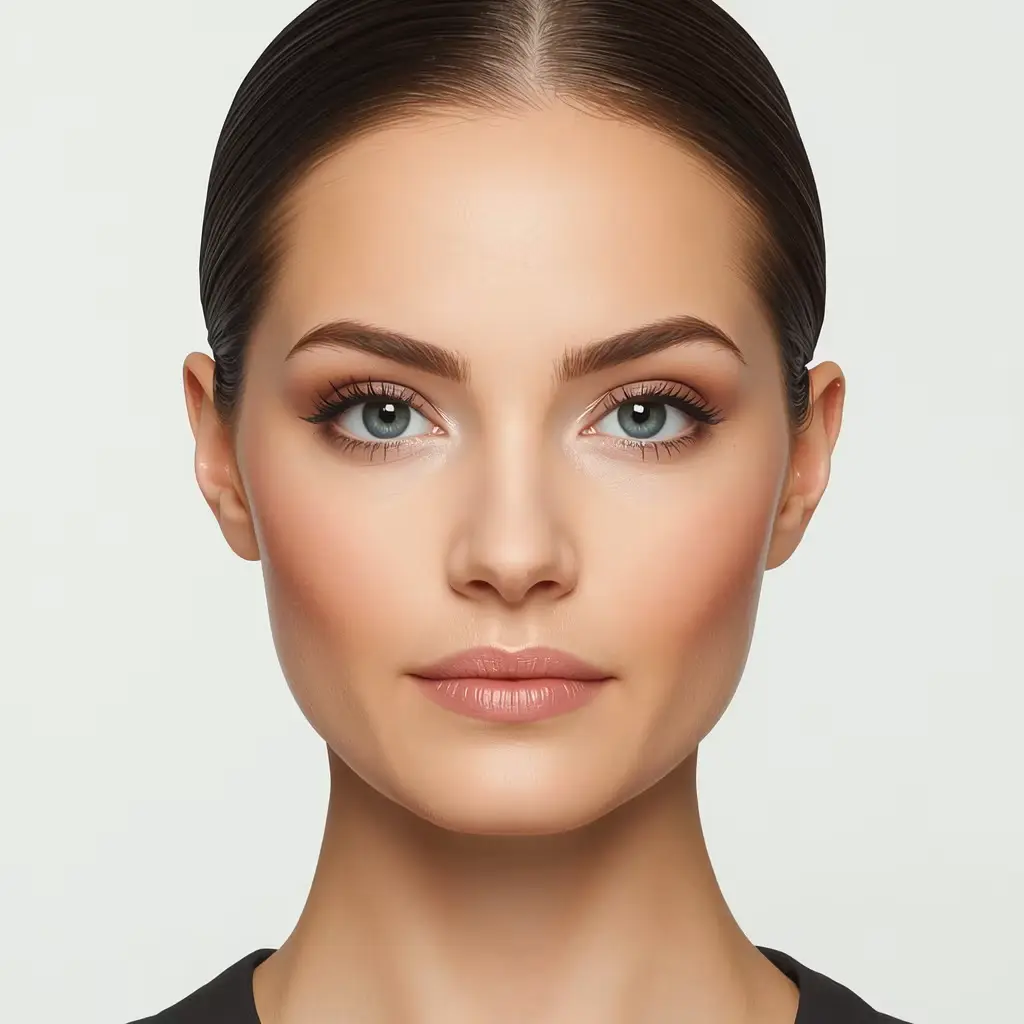
Portrait reference of a woman with a triangle-shaped face, a wider jaw, and a narrower forehead.Triangle
TriangleA stronger lower face with a narrower upper outline.

Reading 07

Triangle

Full triangle guide →

Triangle readings show a wider jaw than forehead, with a strong lower face and a narrower upper line. The jaw is the widest visible cue.

Geometry behind the reading

Lower-face width dominates, while the forehead and cheekbones taper upward. The chin may be broad or softly squared, and the overall outline can look bottom-heavy.

Presentation cues

Hair

Width and volume at the top and temples balance the jaw. A style that is tight on top and wide at the sides will emphasize the lower face.

Fringe

A side-swept fringe or curtain bangs add upper-face width. A center part with flat sides can make the jaw look wider by comparison.

Frames

Browline or wider-top frames add upper-face presence. Make sure the frame extends to the temples without pinching.

Neckline

Statement collars, boat necks, and structured shoulders draw the eye upward. Very narrow straps can make the lower face look wider by contrast.

What usually overcorrects

A very narrow top and a heavy jaw-length style can make the lower face dominate. If you want balance, build presence above the cheek line rather than below it.

Common questions

Before you change anything.

The guide is a comparison tool, not a prescription. These are the questions that come up most often when a reading starts driving styling decisions.

Is this guide based on makeup or beauty standards?

No. It focuses on visible geometry and presentation choices such as hair volume, fringe placement, frame shape, necklines, and colour contrast. It does not prescribe makeup, and it does not rate attractiveness.

Does face shape determine the right hairstyle?

No. Hair texture, density, growth pattern, maintenance, and personal preference matter more than a label. Use the directions to compare options, not to eliminate them.

Why do some portraits show more than one face?

Some reference images are study sheets or symmetry composites. They show variation within the same broad category, which is closer to real life than a single perfect example. They are used at a larger size so the variation stays visible.

Can the detector read a photo with makeup or glasses?

It can often find landmarks, but makeup, heavy filters, strong shadows, and frames that obscure the cheek line can change the estimate. The report includes a capture-quality score; try a neutral, front-facing photo if the result looks unstable.

Start with your own measurements

A reference portrait is not a result.

Use the detector to compare your visible proportions, then return here to test a direction. Nothing is uploaded, and you can correct the reading if it does not fit.